Bunco Score Sheets
Free player score cards for a bunco night of 4 or 6 rounds. Every card has a box for each number in each round, and a tally for wins, losses, buncos and baby buncos. A table tally sheet for counting points to 21 is on page 2.
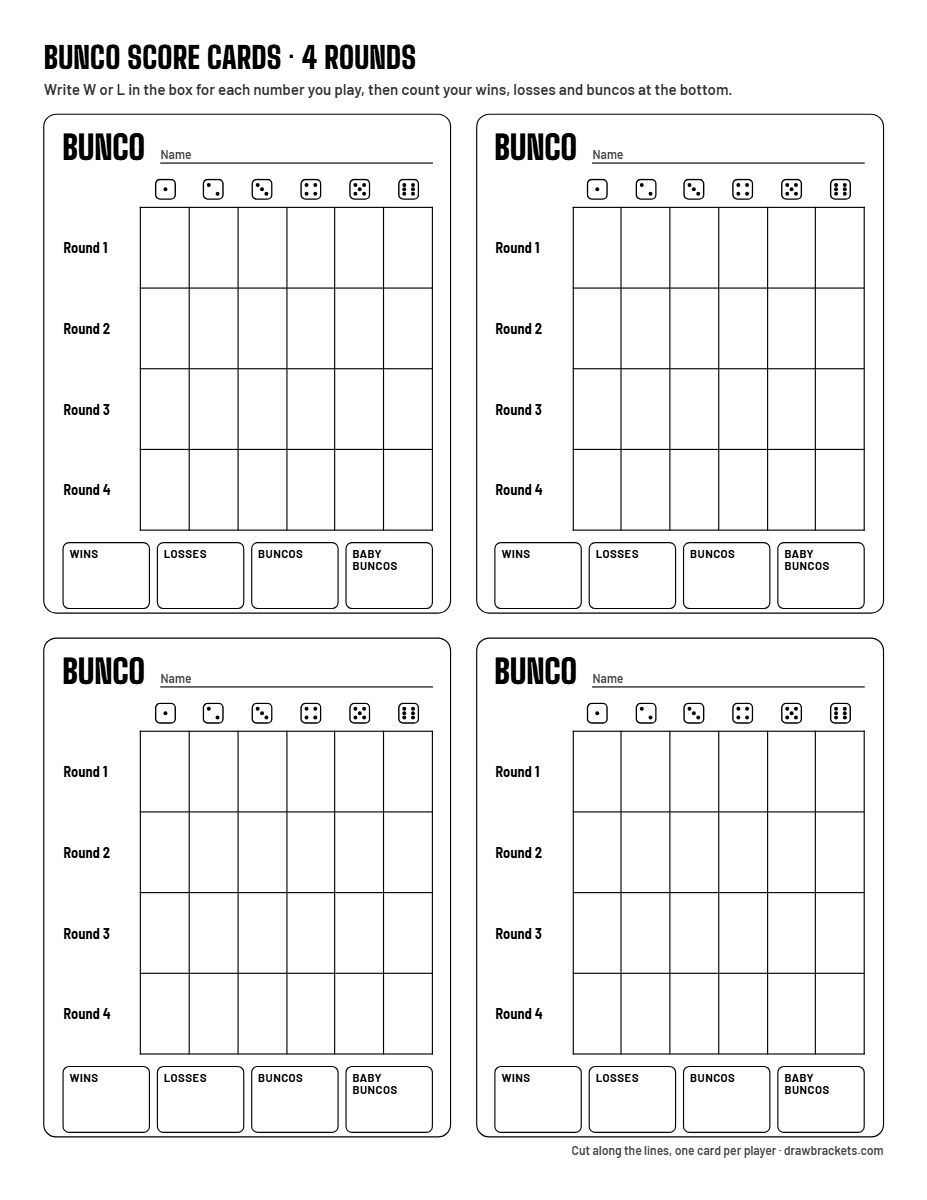
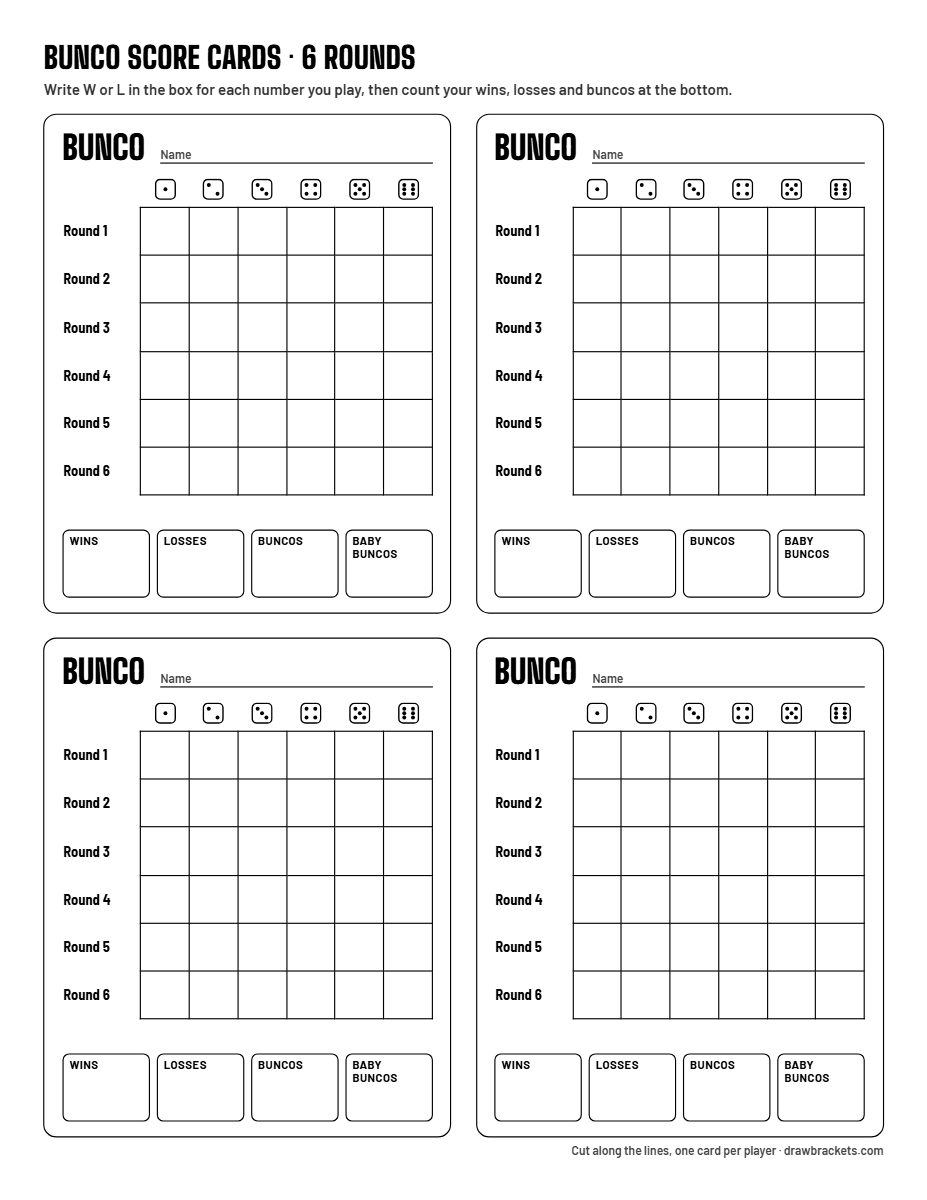
How to fill in the card
- Write your name at the top and keep the card with you when you change tables.
- Each row is one round: the numbers 1 to 6 in turn. When a number is done, write W or L in its box.
- Rolled a bunco, three of the number being played? Add a tick in the Buncos box. If your group counts baby buncos, tick those too.
- At the end of the night, count your Ws and Ls into the tally boxes. The player with the most wins takes the night.
Scoring differs from group to group
In the rules that come with Winning Moves' Box of Bunco, every die showing the number being played scores 1 point, and three of that number is a bunco: 21 points, and the round is over. Three of a kind of a lower number scores 7 and of a higher number 5. Many groups keep it simpler and count any other three of a kind as a baby bunco worth 5. Agree on the rule before the first roll; the card works either way.
Source: Winning Moves, Box of Bunco rules (PDF), checked September 29, 2026.
4 rounds or 6?
A round here is one pass through the numbers 1 to 6; the Winning Moves rules call it a set, suggest a food break after each one and note that many parties end after a third. The 4-round card covers that with a row to spare. Pick the 6-round card for a longer night.
Bunco questions
How many players do you need for bunco?
Twelve is the classic party: three tables of four, with partners sitting across from each other. The Winning Moves rules also cover groups of 2 to 11, with some players rolling for themselves.
Who wins at bunco?
The player with the most wins. If players are tied, the one with more buncos wins, and if they are still tied, a roll-off decides it.
How many cards do I need to print?
One per player. Each page holds four cards, so three pages cover a 12-player night. Page 2 has two table tally blocks, and each table fills in one block per round.